
- Judge says Amgen likely to face significant, irreparable harm
- Enbrel price was capped at $31,200 annually, list price tops $100,000
- Colorado declined to comment
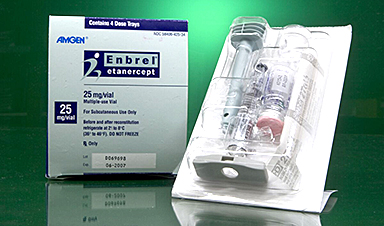
July 1 (Reuters) – A federal judge on Wednesday blocked Colorado from capping the price of Amgen’s (AMGN.O)blockbuster arthritis drug Enbrel, a first-of-its-kind move by a U.S. state.
In granting a preliminary injunction, Chief Judge Daniel Domenico of the Denver federal court said Amgen would likely face significant and irreparable harm from charging lower prices, adding that it could affect the drugmaker’s negotiations for future contracts with wholesalers and distributors.
Domenico said that “as a matter of basic economic logic, Amgen is likely to be significantly harmed by a cap on the price of its product, even if the cap applies unevenly” within the supply chain.
He also said that while Colorado had a legitimate interest in helping patients afford Enbrel, and could try doing so through subsidies or negotiations to lower prices as the federal government has done, “capping the price of a patented drug” was not an option.
In October, the Colorado Prescription Drug Affordability Board capped Enbrel prices at $600 for a 50-milligram weekly dose, or $31,200 per year, effective on January 1, 2027.
The list price of Enbrel exceeds $100,000 per year. Amgen had until July 5 to decide whether to continue selling the drug in Colorado.
Genna Morton, a spokeswoman for Colorado’s Division of Insurance, said the agency cannot comment on pending litigation. Amgen and its lawyers did not immediately respond to requests for comment.
The U.S. pays about three times as much as other high-income countries for branded drugs, and the federal government and states have pursued policies to keep prices down.
Enbrel, whose chemical name is etanercept, is used to treat arthritis and plaque psoriasis. It is one of Amgen’s biggest drugs, accounting for $2.23 billion of sales in 2025.
The Thousand Oaks, California-based drugmaker said Colorado’s cap conflicted with federal patent law, violated its due process rights under the U.S. Constitution and threatened patients’ access to needed treatment.